| Kristalose . . . |
| (lactulose) For Oral Solution |
| Now covered on all Medicaid and Managed Medicaid Plans in the state of New York! |
|
|
|
|
|
| Patients Prefer Kristalose1 |
| 77% more patients preferred powder over liquid lactulose.* |
| Patients Prefer Kristalose1 |
| • |
Once-daily powder dosing |
| • |
Virtually tasteless |
| • |
Palatable—not thick or sticky |
| • |
No need to take with food |
|
| Powder Form of Lactulose |
| • |
Dissolves quickly in just 4oz of water |
| • |
The only powder available by prescription |
| • |
Lactulose has been FDA approved for over 40 years |
|
|
| Portable & Convenient |
| • |
Portable, pre-measured powder packets |
| • |
No bulky or heavy bottles to carry |
|
| Well Tolerated & Effective |
| • |
No negative pregnancy test or concomitant use of contraception required |
| • |
Less than 1.5 calories per 10g dose |
| • |
Less than 1.5 calories per 10g dose |
|
|
|
| Important Safety Information
|
| KRISTALOSE® is contraindicated in patients who require a low-galactose diet and should be used
with caution in diabetics. Initial dosing may produce flatulence and intestinal cramps, which are
usually transient. Excessive dosage can lead to diarrhea with potential complications, such as loss of
fluids, hypokalemia, and hypernatremia. Nausea and vomiting have been reported.
|
|
|
| DOSING CONVERSIONS2 |
| 10 g |
| packet of Kristalose |
| is equivalent to 15 mL (1 tbsp or 3 tsp) of liquid lactulose |
| 20 g |
| packet of Kristalose |
| is equivalent to 30 mL (2 tbsp or 6 tsp) of liquid lactulose |
|
|
| DOSING CONVERSIONS2 |
| 10 g |
| packet of Kristalose |
| is equivalent to 15 mL (1 tbsp or 3 tsp) of liquid lactulose |
| 20 g |
| packet of Kristalose |
| is equivalent to 30 mL (2 tbsp or 6 tsp) of liquid lactulose |
|
|
* Study Context: In a prospective, randomized, open-label, multicenter, seven-day, crossover study. More patients preferred powder compared with liquid lactulose and the products have similar safety profiles. These findings may impact patient compliance, and therefore may affect clinical outcome.
Reference: 1. Barish CF, Voss B, Kaelin B. Comparison of preference and safety of powder and liquid lactulose in adult patients with chronic constipation. Clin Exper Gastroenterol. 2010;3:153-158.
2. Data on file, Cumberland Pharmaceuticals Inc.
|
| Please see full Prescribing Information on back of page |
|
|
| KRISTALOSE® (lactulose) |
| For Oral Solution — Cumberland Pharmaceuticals Inc. |
|
| DESCRIPTION |
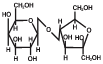
KRISTALOSE (lactulose) is a synthetic disaccharide
in the form of crystals for reconstitution prior to
use for oral administration Each 10 g of lactulose
contains less than 0.3 g galactose and lactose as a
total sum. The pH range is 3.0 to 7.0.
Lactulose is a colonic acidifier which promotes
laxation.
The chemical name for lactulose is 4-O-β-D
Galactopyranosyl-D-fructofuranose. It has the
following structural formula: |
|
The molecular formula is C12H22O11. The molecular weight is 342.30.
It is freely soluble in water. |
| CLINICAL PHARMACOLOGY |
| KRISTALOSE (lactulose) is poorly absorbed from
the gastro-intestinal tract and no enzyme capable of
hydrolysis of this disaccharide is present in human
gastrointestinal tissue. As a result, oral doses of
lactulose reach the colon virtually unchanged. In
the colon, lactulose is broken down primarily to
lactic acid, and also to small amounts of formic
and acetic acids, by the action of colonic bacteria,
which results in an increase in osmotic pressure and
slight acidification of the colonic contents. This in
turn causes an increase in stool water content and
softens the stool.
Since lactulose does not exert its effect until it
reaches the colon, and since transit time through the
colon may be slow, 24 to 48 hours may be required
to produce desired bowel movement.
Lactulose given orally to man and experimental
animals resulted in only small amounts reaching the
blood. Urinary excretion has been determined to be
3% or less and is essentially complete within 24 hours. |
| INDICATIONS AND USAGE |
| KRISTALOSE (lactulose) For Oral Solution is
indicated for the treatment of constipation. In
patients with a history of chronic constipation,
lactulose therapy increases the number of bowel
movements per day and the number of days on which
bowel movements occur. |
| CONTRAINDICATIONS |
| Since KRISTALOSE (lactulose) For Oral Solution
contains galactose (less than 0.3 g/10 g as a total sum
with lactose), it is contraindicated in patients who
require a low galactose diet. |
| WARNINGS |
| A theoretical hazard may exist for patients being
treated with lactulose who may be required
to undergo electrocautery procedures during
proctoscopy or colonoscopy. Accumulation of H2
gas in significant concentration in the presence
of an electrical spark may result in an explosive |
| reaction. Although this complication has not been
reported with lactulose, patients on lactulose therapy
undergoing such procedures should have a thorough
bowel cleansing with a non-fermentable solution.
Insufflation of CO2 as an additional safeguard may be
pursued but is considered to be a redundant measure. |
| PRECAUTIONS |
General
Since KRISTALOSE (lactulose) For Oral Solution
contains galactose and lactose (less than 0.3 g/10
g as a total sum), it should be used with caution in
diabetics.
Information for Patients
In the event that an unusual diarrheal condition
occurs, contact your physician.
Laboratory Tests
Elderly, debilitated patients who receive lactulose for
more than six months should have serum electrolytes
(potassium, chloride, carbon dioxide) measured
periodically.
Drug Interactions
Results of preliminary studies in humans and
rats suggest that nonabsorbable antacids given
concurrently with lactulose may inhibit the desired
lactulose-induced drop in colonic pH. Therefore, a
possible lack of desired effect of treatment should be
taken into consideration before such drugs are given
concomitantly with lactulose..
Carcinogenesis, Mutagenesis, Impairment of
Fertility
There are no known human data on long-term
potential for carcinogenicity, mutagenicity, or
impairment of fertility.
There are no known animal data on long-term
potential for mutagenicity.
Administration of lactulose syrup in the diet of
mice for 18 months in concentrations of 3 and 10
percent (v/w) did not produce any evidence of
carcinogenicity.
In studies in mice, rats, and rabbits, doses of
lactulose syrup up to 6 or 12 mL/kg/day produced
no deleterious effects in breeding, conception, or
parturition.
Pregnancy
Teratogenic Effects
Reproduction studies have been performed in mice,
rats, and rabbits at doses up to 3 or 6 times the usual
human oral dose and have revealed no evidence
of impaired fertility or harm to the fetus due to
lactulose. There are, however, no adequate and
well-controlled studies in pregnant women. Because
animal reproduction studies are not always predictive
of human response, this drug should be used during
pregnancy only if clearly needed.
Nursing Mothers
It is not known whether this drug is excreted in
human milk. Because many drugs are excreted in
human milk, caution should be exercised when
lactulose is administered to a nursing woman.
Pediatric Use
Safety and effectiveness in pediatric patients
have not been established.
|
|
| ADVERSE REACTIONS |
| Precise frequency data are not available. |
| Initial dosing may produce flatulence and intestinal
cramps, which are usually transient. Excessive dosage
can lead to diarrhea with potential complications such
as loss of fluids, hypokalemia, and hypernatremia.
Nausea and vomiting have been reported. |
| OVERDOSAGE |
Signs and Symptoms
There have been no reports of accidental overdosage.
In the event of overdosage, it is expected that
diarrhea and abdominal cramps would be the major
symptoms. Medication should be terminated.
Oral LD50
The acute oral LD50 of the drug is 48.8 mL/kg in mice
and greater than 30 mL/kg in rats.
Dialysis
Dialysis data are not available for lactulose. Its
molecular similarity to sucrose, however, would
suggest that it should be dialyzable.
|
| DOSAGE AND ADMINISTRATION |
| The usual adult dosage is 10 g to 20 g of lactulose
daily. The dose may be increased to 40 g daily if
necessary. Twenty-four to 48 hours may be required
to produce a normal bowel movement. |
| DIRECTIONS FOR PREPARATION |
Dissolve contents of packet in half a glass (4 ounces)
of water.
When Lactulose For Oral Solution is dissolved in
water, the resulting solution may be colorless to a
slightly pale yellow color. |
| HOW SUPPLIED |
KRISTALOSE (lactulose) For Oral Solution is available
in single dose packets of 10 g (NDC 66220-719-01)
and single dose packets of 20 g (NDC 66220-729-
01). The packets are supplied as follows:
NDC 66220-719-30
(Carton of thirty 10 g packets)
NDC 66220-729-30
(Carton of thirty 20 g packets)
|
|
| STORE AT ROOM TEMPERATURE, 15°-30°C (59°-86°F). |
| To report SUSPECTED ADVERSE REACTIONS, contact
Cumberland Pharmaceuticals Inc. at 1-877-484-2700 or
FDA at 1-800-FDA-1088 or www.fda.gov/medwatch. |
| Issued: July 2018 |
Manufactured for:
CUMBERLAND PHARMACEUTICALS INC. |
Nashville, TN 37203
KRISTALOSE is a registered trademark of Cumberland Pharmaceuticals Inc. |
|
|
| ADVERSE REACTIONS |
| Precise frequency data are not available. |
| Initial dosing may produce flatulence and intestinal
cramps, which are usually transient. Excessive dosage
can lead to diarrhea with potential complications such
as loss of fluids, hypokalemia, and hypernatremia.
Nausea and vomiting have been reported. |
| OVERDOSAGE |
Signs and Symptoms
There have been no reports of accidental overdosage.
In the event of overdosage, it is expected that
diarrhea and abdominal cramps would be the major
symptoms. Medication should be terminated.
Oral LD50
The acute oral LD50 of the drug is 48.8 mL/kg in mice
and greater than 30 mL/kg in rats.
Dialysis
Dialysis data are not available for lactulose. Its
molecular similarity to sucrose, however, would
suggest that it should be dialyzable.
|
| DOSAGE AND ADMINISTRATION |
| The usual adult dosage is 10 g to 20 g of lactulose
daily. The dose may be increased to 40 g daily if
necessary. Twenty-four to 48 hours may be required
to produce a normal bowel movement. |
| DIRECTIONS FOR PREPARATION |
Dissolve contents of packet in half a glass (4 ounces)
of water.
When Lactulose For Oral Solution is dissolved in
water, the resulting solution may be colorless to a
slightly pale yellow color. |
| HOW SUPPLIED |
KRISTALOSE (lactulose) For Oral Solution is available
in single dose packets of 10 g (NDC 66220-719-01)
and single dose packets of 20 g (NDC 66220-729-
01). The packets are supplied as follows:
NDC 66220-719-30
(Carton of thirty 10 g packets)
NDC 66220-729-30
(Carton of thirty 20 g packets)
|
|
| STORE AT ROOM TEMPERATURE, 15°-30°C (59°-86°F). |
| To report SUSPECTED ADVERSE REACTIONS, contact
Cumberland Pharmaceuticals Inc. at 1-877-484-2700 or
FDA at 1-800-FDA-1088 or www.fda.gov/medwatch. |
| Issued: July 2018 |
Manufactured for:
CUMBERLAND PHARMACEUTICALS INC. |
Nashville, TN 37203
KRISTALOSE is a registered trademark of Cumberland Pharmaceuticals Inc. |
|
|

|
| ©2023 Cumberland Pharmaceuticals Inc. PSA2700223 |
|
|
|